

The Company Effect
Why the same meal can feel completely different depending on who is there… or who isn’t.

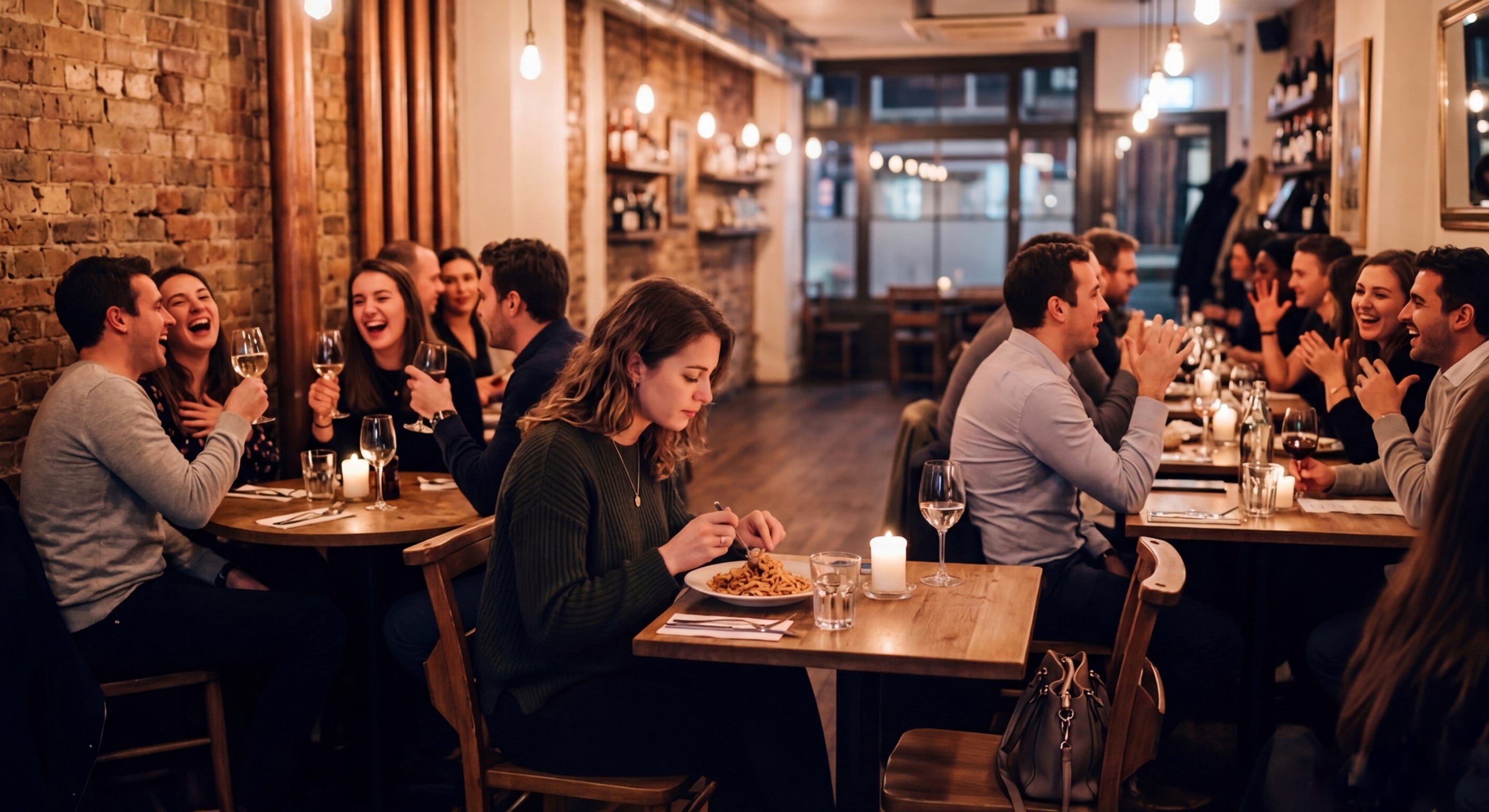
The first time I felt alone at a table, I wasn’t by myself; I was in a crowd. That’s when I learned the gap between ‘being’ alone and ‘feeling’ that way.
On my first day as an exchange student abroad, I walked into the cafeteria not knowing a single face. I went straight for whatever food that felt familiar, sat down by myself at a large table (yes full of people), with my head down and I ate as fast as I could. Not because I was hungry. Because I wanted the moment to end.
But not every solo meal feels like that.
I remember sitting at an airport gate once, a burger in one hand, boarding pass on the other. Alone, yes… but unbothered. Just me, somewhere between one place and another.
And then there are the evenings I chose it completely. Pizza in my room, door locked, television on. Nobody invited, nobody wanted. Just me, deliberately alone, and perfectly at peace with it.

Three meals eaten in silence. Three completely different feelings.
That’s what this is about, not just what it means to eat alone, but what company, or the absence of it, truly does to a meal.
The Solitary Table
Eating by ourselves is something we can choose to do and also can be something (depending on the circumstance) we are forced to do. When we didn’t choose it, there’s some sort of vulnerability attached to it, the meal becomes more of a task you have to complete rather than an experience to have. As we sit alone we become aware of everything and nothing at the same time, we glance at our phones looking for some form of virtual company or an escape route to take us away from the reality of sitting in the nakedness of being alone in a room full of people who are not. In a scenario like that the plate is the only thing we look at, we eat faster not to savor the moment but to survive it.
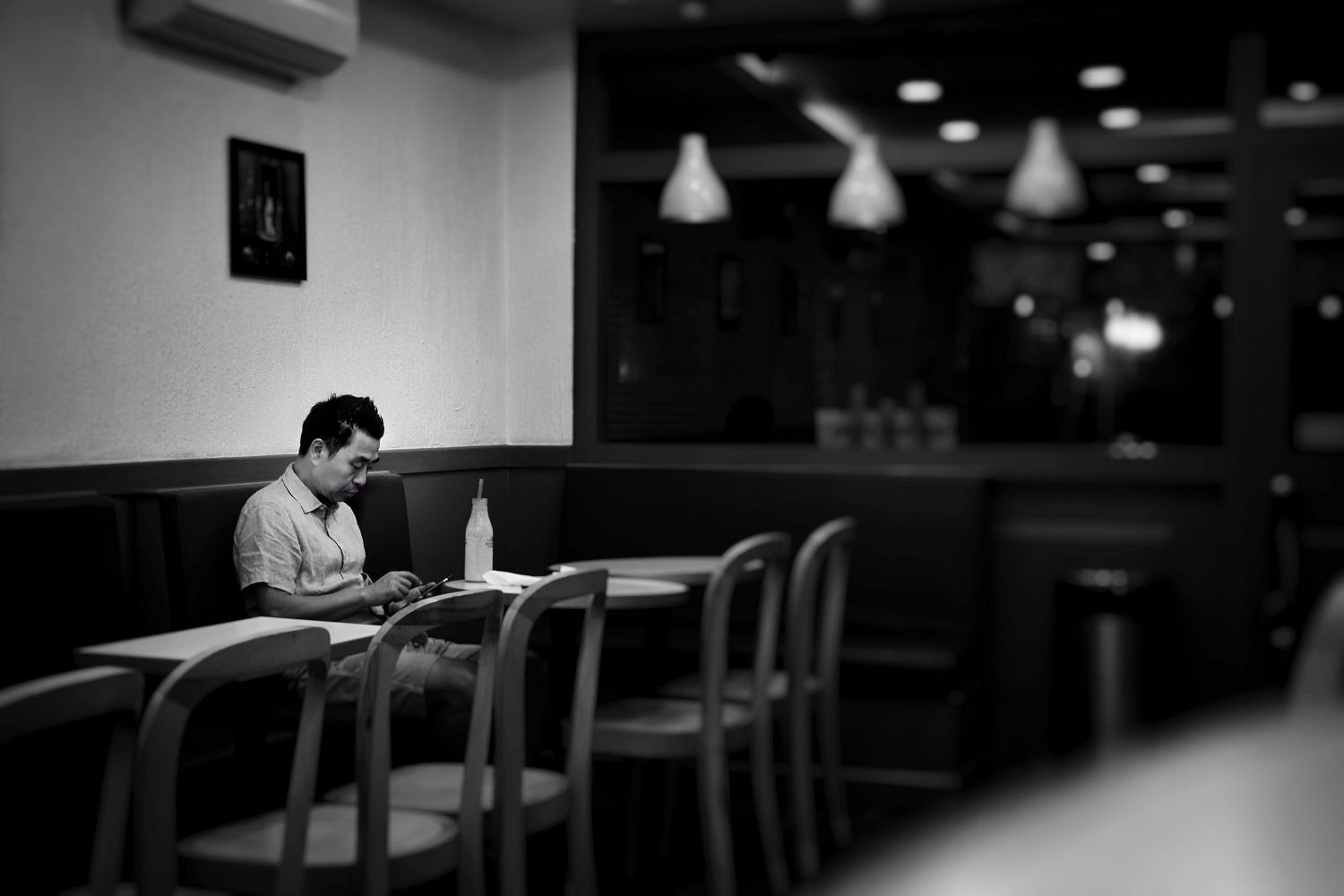
There’s a different form of solitude, the one that’s deliberate, the one you actually choose and even protect. We’ve all wanted some “me time”, unbothered, sometimes even selfishly, but 100% ours, just ourselves with the company of a meal we crave.
In the first scenario I mentioned there was a vulnerability attached to it, in this case there’s something deeply restorative in a meal eaten in a deliberate solitude.
You don’t want to be bothered, you don’t want anyone asking anything from you and that’s totally fine, you’re allowed to be messy, to overeat a little without anyone judging you because you placed yourself in a bubble of your choice with a comforting food on your plate.
Something very interesting ends up happening, you actually taste more. Without conversation to divide your attention, without the social performance of a shared meal, your senses have nowhere else to go. The food gets your full presence. And full presence, it turns out, is the best seasoning there is.
Same empty chair. Same silence. Completely different experience.
The difference between the two has nothing to do with the food, and everything to do with whether the solitude was handed to you or chosen by you.
The Full Table
There’s a reason we use food as the excuse to gather, because something happens around a table that doesn’t happen anywhere else. Sometimes that something is magic. And sometimes it isn’t.
If we look back in history many great things happened around a table while groups of humans were sharing a bite. Many discussions happened in ancient Greece that shaped the future of civilization, thousands of business deals are closed everyday in restaurants and even Jesus announced Judas’s betrayal at the table during the last supper. In all those scenarios there was something common … people together with the purpose (or sometimes the excuse) to share a meal.
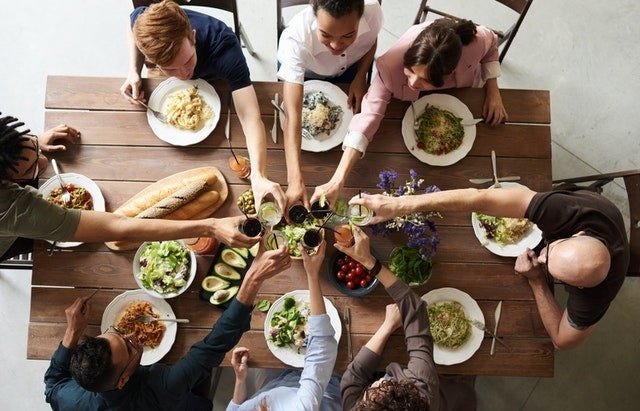
When we are at the table with a company we enjoy and the mood is the right one, it’s one of the most pleasurable experiences we can have as humans, the conversation flows effortlessly, we create connections and unconsciously the food fades into the background because the spotlight goes to the emotions that this social experience is making us feel, you can even look up and realize that a couple of hours have passed and none of the guests noticed it because they were too distracted (or too focused) living in the present moment.
Sometimes the tables turn (pun intended) and we find ourselves in an obligatory full table, yes we are surrounded by people, company is there but is not something we particularly enjoy much. The whole eating experience feels like work, it takes effort and it doesn’t feel as smooth as it should.
The tense family dinner, the awkward colleague gathering or the Sunday lunch with the distant cousins we don’t like that much. In all of those contexts food becomes secondary, it might even taste delicious but the whole environment deprives us from the ability to fully enjoy it, our senses are occupied coping with our “survival” in that particular period that they get distracted from actually tasting and processing a delicious meal.
Same full table. Same food. Completely different meal. The people around us don’t just share our food, they are almost an ingredient or seasoning that can change the way it tastes. A meal eaten in genuine company is nourishing in ways that have nothing to do with nutrition. And a meal eaten in the wrong company can make even the best food feel bland.
What The Table Reveals
The table never lies.
Whether we are alone or surrounded by people, whether we are happy to be there or not, the table always reflects exactly how we feel. We might think that when the plate comes out of the kitchen and reaches our table is already a finished product, it’s something done. The chef already did his job and the flavors (or the absence of them) are locked in and all we have to do is simply taste the end result of the preparation process. But no, the food absorbs the mood, the company, the moment and makes it part of the experience and that’s something we can’t ignore even if we want to.
We’ve all had objectively delicious meals that we were not able to enjoy as much as we should have. The food is not at fault here, the blame goes to something else that made itself present at the table and took over. Sometimes a snarky comment said by another guest without much thought to fill an uncomfortable silence, a difficult conversation that makes the environment we’re in feel heavy or a personal situation that forces the mind to be somewhere else entirely. The food was good but the moment wasn’t… And the moment clearly won.
The opposite can be true here as well. An ordinary meal, nothing fancy or expensive, but eaten with the right company at the right time can feel like an unforgettable experience. The meal was not special but everything else around it was.
This is what the table reveals: that flavor is never just about food. It’s about context. It’s about who’s there and who isn’t, whether you wanted to be there or not and how you felt when you sat down.
We sometimes place our focus on what we eat (the ingredients, which restaurant we go to, the nutrition facts, etc) and neglect the conditions we eat in. But those conditions might matter more than anything on the plate.
The table knows this. It always has.
We’ve established that food has the ability to tell stories, and the meals we’ve enjoyed have written many in our life. The solo ones, the crowded ones, the ones we wished would end and the ones we never wanted to leave. Each one shaped by something beyond the food itself, the company, the mood, the moment.
We are fortunate when we have people worth sharing a table with. And we are equally fortunate when we learn to enjoy our own company at that same table. Both are a gift, just wrapped differently.
So the next time you sit down to eat (alone or surrounded by people) pay attention to everything that isn’t on the plate. Because that might be the most important part of the meal.
Who do you most love sharing a table with? And when was the last time you told them?
Juan Camilo Quintero
i love how you framed the difference between chosen and forced solitude, it changes everything . excited to connect!!💕
It’s kind of dangerous for you to write this very well... I finished the article not knowing what I’m hungrier for: the descriptions of the meals or the idea of spending hours at a table with the author😊 Amazing article, congrats! 👏